Samsung's Galaxy S4 Could Account for 2.5% of Semi Sales this Year - Analyst
From a components standpoint, the upgrades for the Galaxy S4 are: 1) .ac WiFi (prior .n); 2) 2GB DDR3 LP mobile DRAM (prior DDR2 at 1.0-1.5GB); and 3) 13MPx back-side image sensor (prior 8MPx). Also, sensing and RF content could be higher to manage increasing functionality (infrared, hover, gesture) and 4G complexities (PA, filters, switches and tuning) in select regions.
By RBC's early estimates, the Bill of Material (BOM) for the Galaxy S4 could be 5-10% higher versus predecessor Galaxy S3 with the largest difference stemming from higher mobile DRAM and sensors. "In our view, the average BOM for the S4 should be near $108/per smartphone, with components differing by region."
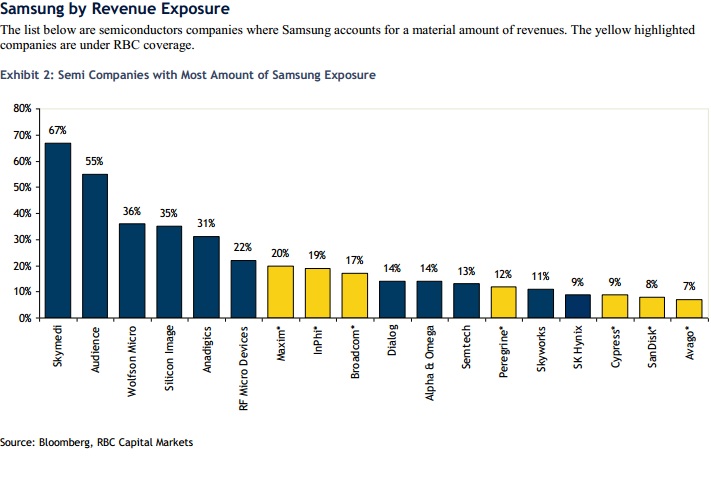
Freedman weighed in on what the Galaxy S4 could mean for semiconductor sector. The company's exposed, according to the analyst, are likely Broadcom (NASDAQ: BRCM) (incremental NFC and .ac content adding an incremental $0.50 to content), Maxim (NASDAQ: MXIM) (power management SoC at ~$3 plus IR gesture sensor), Avago (NASDAQ: AVGO) (RF components) and SanDisk (NASDAQ: SNDK) & Micron (NYSE: MU) indirectly through higher internal consumption of Samsung NAND. Also, Cypress Semiconductor (NYSE: CY).
 Other U.S.-traded companies will significant exposure to Samsung, but not covered by RBC Capital are:
 Audience, Inc. (NASDAQ: ADNC), Silicon Image, Inc. (NASDAQ: SIMG), Anadigics, Inc. (NASDAQ: ANAD), RF Micro Devices Inc. (NASDAQ: RFMD), Semtech Corporation (NASDAQ: SMTC), Skyworks Solutions Inc. (NASDAQ: SWKS)
Below is a chart prepared by RBC on the level of exposure to Samsung: