


Airbus forecasts 46% growth in global freighter fleet by 2045
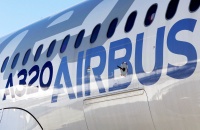
Airbus Group (OTC: EADSY) projects the worldwide fleet of dedicated freighter aircraft will grow 46% from 2,360 in 2026 to 3,460 aircraft by 2045, according to its 2026 Cargo Global Market Forecast, announced at the Cargo Facts Symposium.
The forecast estimates a requirement for 2,670 freighters over the period, primarily to replace older models (1,580 aircraft) and to accommodate growth (1,090 aircraft). Of those, 1,140 will be single-aisle, 860 mid-size widebody, and 670 large widebody aircraft. Approximately 970 will be new-build and 1,700 will be converted from passenger aircraft.
Global air cargo traffic is forecast to grow at 3.2% annually over the next two decades, supported by long-term trade expansion projected at a 2.9% compound annual growth rate. Computers and high-technology goods transported by air cargo have doubled in value over the last three years, reaching 15% of air cargo value in 2026. E-commerce is cited as an additional demand driver.

Regional demand for the 2,670 freighter deliveries will be led by North America and Asia-Pacific, requiring 925 and 850 aircraft respectively, together representing roughly two-thirds of total global demand. Europe and CIS will account for 515 aircraft, followed by Latin America with 165, the Middle East with 125, and Africa with 90.
Asia-Pacific is expected to remain the leading region for international air cargo traffic, with routes to North America projected at a 3.8% annual growth rate. Airbus notes these routes can be served by its A350F freighter. The forecast also includes passenger-to-freighter conversions across the A320, A321, and A330 families.