


Form 424B2 ROYAL BANK OF CANADA
Subject
to Completion October 7, 2026 |
Filed
Pursuant to Rule 424(b)(2) (To Prospectus and Prospectus Supplement, each dated December 20, 2023, and Product Supplement EQUITY MLI-1 dated September 12, 2025) |
| Units $10 principal amount per unit CUSIP No. |
Pricing Date* Settlement Date* Maturity Date* |
October , 2026 October , 2026 January , 2028 |
 |
*Subject to change based on the actual date the notes are priced for initial sale to the public (the “pricing date”) |
|
Bear Market-Linked One Look Notes with a Barrier Linked to the iShares® 20+ Year Treasury Bond ETF |
| § | Maturity of approximately 15 months |
| § | If the Ending Value of the iShares® 20+ Year Treasury Bond ETF (the “Market Measure”) is less than or equal to the Starting Value, a positive return of [10.00% to 12.00%] |
| § | If the Market Measure increases by no more than 20.00% from the Starting Value to the Ending Value, a return of principal |
| § | If the Market Measure increases by more than 20.00% from the Starting Value to the Ending Value, 1-to-1 negative exposure to increases in the Market Measure from the Starting Value, with 100% of your principal at risk. You will lose all or a portion, which could be significant, of your principal amount if the Ending Value increases above the Starting Value by more than 20.00% |
| § | By purchasing the notes, you are taking the primarily bearish view that the value of the Market Measure will decline over the term of the notes, such that the Ending Value will be less than or equal to the Starting Value |
| § | All payments occur at maturity and are subject to the credit risk of Royal Bank of Canada |
| § | No periodic interest payments |
| § | Limited secondary market liquidity, with no exchange listing |
| § | The notes are unsecured debt securities and are not savings accounts or insured deposits of a bank. The notes are not insured by the Canada Deposit Insurance Corporation, the U.S. Federal Deposit Insurance Corporation, or any other governmental agency of Canada or the United States |
The notes are being issued by Royal Bank of Canada (“RBC”). There are important differences between the notes and a conventional debt security, including different investment risks and certain additional costs. See “Risk Factors” and “Additional Risk Factors” beginning on page TS-7 of this term sheet and “Risk Factors” beginning on page PS-4 of product supplement EQUITY MLI-1.
The initial estimated value of the notes as of the pricing date is expected to be between $9.20 and $9.70 per unit, which is less than the public offering price listed below. See “Summary” on the following page, “Risk Factors” beginning on page TS-7 of this term sheet and “Structuring the Notes” below for additional information. The actual value of your notes at any time will reflect many factors and cannot be predicted with accuracy.
_
None of the Securities and Exchange Commission (the “SEC”), any state securities commission, or any other regulatory body has approved or disapproved of these securities or determined if this Note Prospectus (as defined below) is truthful or complete. Any representation to the contrary is a criminal offense.
_
| Per Unit | Total | |
| Public offering price | $ 10.00 | $ |
| Underwriting discount(1) | $ 0.10 | $ |
| $ 0.05 | $ | |
| Proceeds, before expenses, to RBC | $ 9.85 | $ |
| (1) | The underwriting discount reflects a sales commission of $0.10 per unit and a structuring fee of $0.05 per unit. |
The notes:
| Are Not FDIC Insured | Are Not Bank Guaranteed | May Lose Value |
BofA Securities
October , 2026
| Bear Market-Linked One Look Notes with a Barrier | TS-2 |
| Bear Market-Linked One Look Notes with a Barrier Linked to the iShares® 20+ Year Treasury Bond ETF, due January , 2028 |
Summary
The Bear Market-Linked One Look Notes with a Barrier Linked to the iShares® 20+ Year Treasury Bond ETF, due January , 2028 (the “notes”) are our senior unsecured debt securities. The notes are not insured by the Canada Deposit Insurance Corporation or the U.S. Federal Deposit Insurance Corporation or secured by collateral. The notes will rank equally with all of our other unsecured and unsubordinated debt. Any payments due on the notes, including any repayment of principal, will be subject to the credit risk of RBC.
The notes are not bail-inable notes (as defined in the prospectus supplement). The notes provide you with a Digital Payment if the Ending Value of the Market Measure, which is the iShares® 20+ Year Treasury Bond ETF (the “Market Measure”), is less than or equal to the Starting Value. If the Ending Value is greater than the Starting Value but less than or equal to the Threshold Value, you will receive the principal amount of your notes. If the Ending Value is greater than the Threshold Value, you will lose all or a portion, which could be significant, of the principal amount of your notes. Any payments on the notes will be calculated based on the $10 principal amount per unit and will depend on the performance of the Market Measure, subject to our credit risk. See “Terms of the Notes” below.
The economic terms of the notes (including the Digital Payment) are based on our internal funding rate, which is the rate we pay to borrow funds through the issuance of market-linked notes, and the economic terms of certain related hedging arrangements. Our internal funding rate is typically lower than the rate we would pay when we issue conventional fixed or floating rate debt securities. This difference in funding rate, as well as the underwriting discount and costs associated with hedging the notes, reduce the economic terms of the notes to you and the price at which you may be able to sell the notes in any secondary market. Due to these factors, the public offering price you pay to purchase the notes will be greater than the initial estimated value of the notes.
On the cover page of this term sheet, we have provided the initial estimated value range for the notes. This initial estimated value range was determined based on our and our affiliates’ pricing models, which take into consideration our internal funding rate and the market prices for the hedging arrangements related to the notes. The initial estimated value of the notes calculated on the pricing date will be set forth in the final term sheet made available to investors in the notes. For more information about the initial estimated value and the structuring of the notes, see “Structuring the Notes” below.
Terms of the Notes |
| Issuer: | Royal Bank of Canada (“RBC”) |
| Principal Amount: | $10.00 per unit |
| Term: | Approximately 15 months |
| Market Measure: | The iShares® 20+ Year Treasury Bond ETF (Bloomberg symbol: “TLT”) |
| Starting Value: | The Closing Market Price of the Market Measure on the pricing date |
| Ending Value: | The Closing Market Price of the Market Measure on the Calculation Day times the Price Multiplier on the Calculation Day. The scheduled Calculation Day is subject to postponement in the event of Market Disruption Events and non-Market Measure Business Days, as described beginning on page PS-30 of product supplement EQUITY MLI-1 |
| Digital Payment: | [$1.00 to $1.20] per unit, which represents a return of [10.00% to 12.00%] over the principal amount. The actual Digital Payment will be determined on the pricing date. |
| Threshold Value: | 120.00% of the Starting Value, rounded to two decimal places |
| Redemption Amount: |
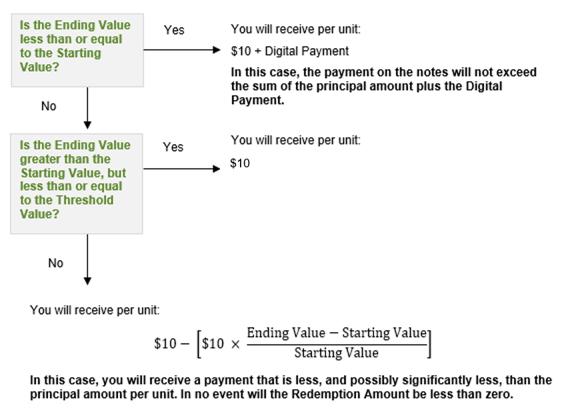
On the maturity date, you will receive a cash payment per unit determined as follows:
§ If the Ending Value is less than or equal to the Starting Value:
$10 + Digital Payment
§ If the Ending Value is greater than the Starting Value, but less than or equal to the Threshold Value:
$10
§ If the Ending Value is greater than the Threshold Value:
In no event will your Redemption Amount be less than zero. |
| Calculation Day / Maturity Valuation Period: | Approximately the fifth scheduled Market Measure Business Day immediately prior to the maturity date |
| Price Multiplier: | 1, subject to adjustment for certain events relating to the Market Measure, as described beginning on page PS-37 of product supplement EQUITY MLI-1 |
| Fees and Charges: | The underwriting discount of $0.15 per unit listed on the cover page |
| Calculation Agent: | RBC Capital Markets, LLC (“RBCCM”) |

| Bear Market-Linked One Look Notes with a Barrier | TS-3 |
| Bear Market-Linked One Look Notes with a Barrier Linked to the iShares® 20+ Year Treasury Bond ETF, due January , 2028 |
Redemption Amount Determination
On the maturity date, you will receive a cash payment per unit determined as follows:
| Bear Market-Linked One Look Notes with a Barrier | TS-4 |
| Bear Market-Linked One Look Notes with a Barrier Linked to the iShares® 20+ Year Treasury Bond ETF, due January , 2028 |
The terms and risks of the notes are contained in this term sheet and in the following:
| § | Product supplement EQUITY MLI-1 dated September 12, 2025: https://www.sec.gov/Archives/edgar/data/1000275/000095010325011590/dp234272_424b5-equitymli1.htm |
| § | Series J MTN prospectus supplement dated December 20, 2023: https://www.sec.gov/Archives/edgar/data/1000275/000119312523299523/d638227d424b3.htm |
| § | Prospectus dated December 20, 2023: https://www.sec.gov/Archives/edgar/data/1000275/000119312523299520/d645671d424b3.htm |
These documents (together, the “Note Prospectus”) have been filed as part of a registration statement with the SEC, which may, without cost, be accessed on the SEC website as indicated above or obtained from us, Merrill Lynch, Pierce, Fenner & Smith Incorporated (“MLPF&S”) or BofA Securities, Inc. (“BofAS”) by calling 1-800-294-1322. Before you invest, you should read the Note Prospectus, including this term sheet, and the other documents that we have filed with the SEC for information about us and this offering. Any prior or contemporaneous oral statements and any other written materials you may have received are superseded by the Note Prospectus. Capitalized terms used but not defined in this term sheet have the meanings set forth in product supplement EQUITY MLI-1. Unless otherwise indicated or unless the context requires otherwise, all references in this term sheet to “Royal Bank of Canada,” the “Bank,” “we,” “us,” “our” or similar references mean only RBC.
Investor Considerations
| You may wish to consider an investment in the notes if: | The notes may not be an appropriate investment for you if: |
| § | You anticipate that the Market Measure will not increase from the Starting Value to the Ending Value. |
| § | You are willing to risk a substantial loss of principal if the Market Measure increases from the Starting Value to an Ending Value that is above the Threshold Value. |
| § | You accept that (i) the return on the notes will be limited to the return represented by the Digital Payment if the Ending Value is less than or equal to the Starting Value, (ii) you will receive only the principal amount of your notes if the Ending Value is greater than the Starting Value but not greater than the Threshold Value and (iii) if the Ending Value is greater than the Threshold Value, you will participate negatively in the appreciation of the Market Measure from the Starting Value to the Ending Value. |
| § | You are willing to forgo the interest payments that are paid on conventional interest-bearing debt securities. |
| § | You are willing to forgo dividends and other benefits of directly owning shares of the Market Measure or the securities held by the Market Measure. |
| § | You are willing to accept a limited or no market for sales of the notes prior to maturity, and understand that the market prices for the notes, if any, will be affected by various factors, including our actual and perceived creditworthiness, our internal funding rate and fees and charges on the notes. |
| § | You are willing to assume our credit risk, as issuer of the notes, for all payments under the notes, including the Redemption Amount. |
| § | You anticipate that the Market Measure will increase from the Starting Value to the Ending Value or that it will decrease by more than the return represented by the Digital Payment. |
| § | You seek an uncapped return on your investment. |
| § | You seek principal repayment or preservation of capital. |
| § | You seek interest payments or other current income on your investment. |
| § | You want to receive dividends or have other benefits of directly owning shares of the Market Measure or the securities held by the Market Measure. |
| § | You seek an investment for which there will be a liquid secondary market. |
| § | You are unwilling or are unable to take market risk on the notes or to take our credit risk as issuer of the notes. |
We urge you to consult your investment, legal, tax, accounting and other advisors before you invest in the notes.
| Bear Market-Linked One Look Notes with a Barrier | TS-5 |
| Bear Market-Linked One Look Notes with a Barrier Linked to the iShares® 20+ Year Treasury Bond ETF, due January , 2028 |
Hypothetical Payout Profile and Examples of Payments at Maturity
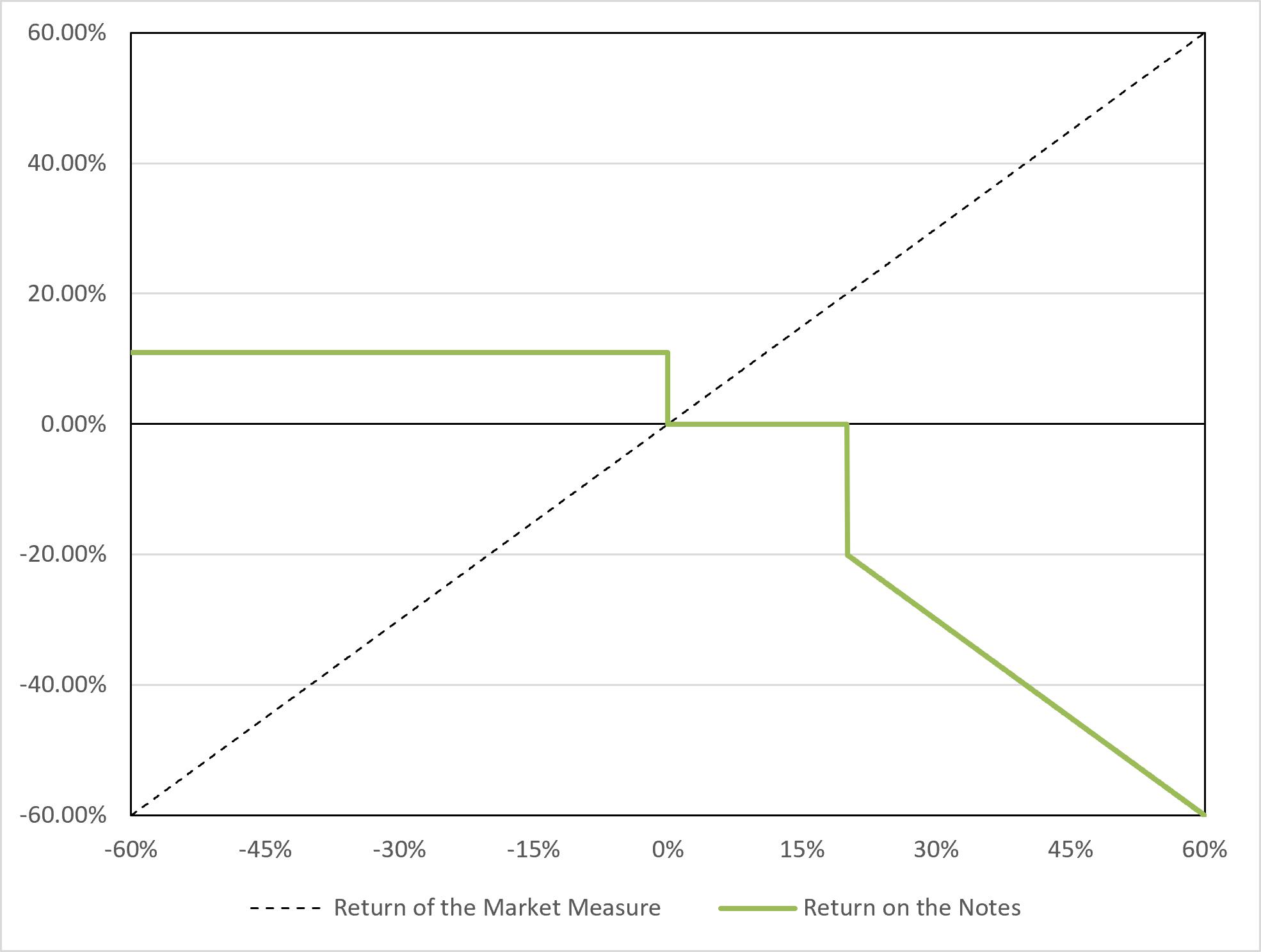
The graph below is based on hypothetical numbers and values.
|
Bear Market-Linked One Look Notes with a Barrier
|
This graph reflects the returns on the notes, based on the Threshold Value of 120.00% of the Starting Value and a hypothetical Digital Payment of $1.10 per unit (the midpoint of the Digital Payment range of [$1.00 to $1.20] per unit). The green line reflects the returns on the notes, while the dotted gray line reflects the returns of a direct investment in the Market Measure, excluding dividends.
This graph has been prepared for purposes of illustration only.
|
The following table and examples are for purposes of illustration only. They are based on hypothetical values and show hypothetical returns on the notes. They illustrate the calculation of the Redemption Amount and total rate of return based on a hypothetical Starting Value of 100.00, a hypothetical Threshold Value of 120.00, a hypothetical Digital Payment of $1.10 per unit and a range of hypothetical Ending Values. The actual amount you receive and the resulting total rate of return will depend on the actual Starting Value, Threshold Value, Ending Value and Digital Payment, and whether you hold the notes to maturity. The following examples do not take into account any tax consequences from investing in the notes.
For recent actual prices of the Market Measure, see “The Market Measure” section below. The Ending Value will not include any income generated by dividends paid on the Market Measure, which you would otherwise be entitled to receive if you invested in the Market Measure directly. In addition, all payments on the notes are subject to issuer credit risk.
|
Ending Value |
Percentage Change from the Starting Value to the Ending Value |
Redemption Amount per Unit |
Total Rate of Return on the Notes | |||
| 0.00 | -100.00% | $11.100 | 11.00% | |||
| 50.00 | -50.00% | $11.100 | 11.00% | |||
| 80.00 | -20.00% | $11.100 | 11.00% | |||
| 90.00 | -10.00% | $11.100 | 11.00% | |||
| 95.00 | -5.00% | $11.100 | 11.00% | |||
| 100.00(1) | 0.00% | $11.100(2) | 11.00% | |||
| 100.01 | 0.01% | $10.000 | 0.00% | |||
| 105.00 | 5.00% | $10.000 | 0.00% | |||
| 110.00 | 10.00% | $10.000 | 0.00% | |||
| 120.00(3) | 20.00% | $10.000 | 0.00% | |||
| 120.01 | 20.01% | $7.999 | -20.01% | |||
| 130.00 | 30.00% | $7.000 | -30.00% | |||
| 140.00 | 40.00% | $6.000 | -40.00% | |||
| 150.00 | 50.00% | $5.000 | -50.00% | |||
| 170.00 | 70.00% | $3.000 | -70.00% | |||
| 200.00 | 100.00% | $0.000 | -100.00% | |||
| 225.00 | 125.00% | $0.000(4) | -100.00% | |||
| 250.00 | 150.00% | $0.000 | -100.00% |
| (1) | The hypothetical Starting Value of 100.00 used in these examples has been chosen for illustrative purposes only, and does not represent a likely actual Starting Value for the Market Measure. |
| (2) | This amount represents the sum of the principal amount and the hypothetical Digital Payment of $1.10 per unit. Your investment return if the Market Measure depreciates is limited to the return represented by the Digital Payment. |
| (3) | This is the hypothetical Threshold Value. |
| (4) | The Redemption Amount per unit will not be less than zero. |
| Bear Market-Linked One Look Notes with a Barrier | TS-6 |
| Bear Market-Linked One Look Notes with a Barrier Linked to the iShares® 20+ Year Treasury Bond ETF, due January , 2028 |
Redemption Amount Calculation Examples:
| Example 1 | ||
| The Ending Value is 225.00, or 225.00% of the Starting Value: | ||
| Starting Value: 100.00 | ||
| Threshold Value: 120.00 | ||
| Ending Value: 225.00 | ||
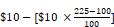 = -$2.50 |
however, because the Redemption Amount for the notes cannot be less than zero, the Redemption Amount will be zero. | |
| Example 2 | |
| The Ending Value is 150.00, or 150.00% of the Starting Value: | |
| Starting Value: 100.00 | |
| Threshold Value: 120.00 | |
| Ending Value: 150.00 | |
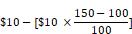 |
= $5.00 Redemption Amount per unit |
| Example 3 | |
| The Ending Value is 110.00, or 110.00% of the Starting Value: | |
| Starting Value: 100.00 | |
| Threshold Value: 120.00 | |
| Ending Value: 110.00 | |
| = $10.00 Redemption Amount per unit, the principal amount, since the Ending Value is greater than the Starting Value but less than or equal to the Threshold Value | |
| Example 4 | |
| The Ending Value is 50.00, or 50.00% of the Starting Value: | |
| Starting Value: 100.00 | |
| Threshold Value: 120.00 | |
| Ending Value: 50.00 | |
|
$10.00 + $1.10
|
= $11.10 Redemption Amount per unit, the principal amount plus the Digital Payment, since the Ending Value is less than or equal to the Starting Value.
In this example, even though the Ending Value is significantly less than the Starting Value, your return on the notes will be limited to the return represented by the Digital Payment.
|
| Bear Market-Linked One Look Notes with a Barrier | TS-7 |
| Bear Market-Linked One Look Notes with a Barrier Linked to the iShares® 20+ Year Treasury Bond ETF, due January , 2028 |
Risk Factors
There are important differences between the notes and a conventional debt security. An investment in the notes involves significant risks, including those listed below. You should carefully review the more detailed explanation of risks relating to the notes in the “Risk Factors” sections beginning on page PS-4 of product supplement EQUITY MLI-1, page S-3 of the MTN prospectus supplement and page 1 of the prospectus identified above. We also urge you to consult your investment, legal, tax, accounting, and other advisors before you invest in the notes.
Structure-related Risks
| § | There is no fixed principal repayment amount on the notes at maturity. If the Ending Value is greater than the Threshold Value, you will lose all or a portion, which could be significant, of your principal amount. |
| § | Your investment return is limited to the return represented by the Digital Payment and may be less than a comparable short position in the Market Measure or the securities held by the Market Measure. |
| § | Payments on the notes will not reflect changes in the value of the Market Measure other than on the Calculation Day. As a result, even if the value of the Market Measure decreases during the term of the notes, you will receive a Redemption Amount that is less than the principal amount if the Ending Value is greater than the Threshold Value on the Calculation Day, even if the value of the Market Measure was always less than the Threshold Value prior to the Calculation Day. |
| § | Your return on the notes may be less than the yield you could earn by owning a conventional fixed or floating rate debt security of comparable maturity. |
| § | Payments on the notes are subject to our credit risk, and actual or perceived changes in our creditworthiness are expected to affect the value of the notes. If we become insolvent or are unable to pay our obligations, you may lose your entire investment. |
Valuation- and Market-related Risks
| § | The initial estimated value of the notes is only an estimate, determined as of a particular point in time by reference to our and our affiliates’ pricing models. These pricing models consider certain assumptions and variables, including our credit spreads, our internal funding rate, mid-market terms on hedging transactions, expectations on dividends, interest rates and volatility, price-sensitivity analysis and the expected term of the notes. These pricing models rely in part on certain forecasts about future events, which may prove to be incorrect. |
| § | The public offering price you pay for the notes will exceed the initial estimated value. If you attempt to sell the notes prior to maturity, their market value may be lower than the price you paid for them and lower than the initial estimated value. This is due to, among other things, changes in the value of the Market Measure, our internal funding rate and the inclusion in the public offering price of the underwriting discount and costs associated with hedging the notes, all as further described in “Structuring the Notes” below. These factors, together with various credit, market and economic factors over the term of the notes, are expected to reduce the price at which you may be able to sell the notes in any secondary market and will affect the value of the notes in complex and unpredictable ways. |
| § | The initial estimated value does not represent a minimum or maximum price at which we, RBCCM, MLPF&S, BofAS or any of our respective affiliates would be willing to purchase your notes in any secondary market (if any exists) at any time. The value of your notes at any time after issuance will vary based on many factors that cannot be predicted with accuracy, including the performance of the Market Measure, our creditworthiness and changes in market conditions. |
| § | A trading market is not expected to develop for the notes. None of us, RBCCM, MLPF&S or BofAS is obligated to make a market for, or to repurchase, the notes. There is no assurance that any party will be willing to purchase your notes at any price in any secondary market. |
Conflict-related Risks
| § | Our business, hedging and trading activities, and those of MLPF&S, BofAS and our respective affiliates (including trades in shares of the Market Measure or the securities held by the Market Measure), and any hedging and trading activities we, MLPF&S, BofAS or our respective affiliates engage in for our clients’ accounts, may affect the market value and return of the notes and may create conflicts of interest with you. |
| § | There may be potential conflicts of interest involving the calculation agent, which is an affiliate of ours. We have the right to appoint and remove the calculation agent. |
Market Measure-related Risks
| § | The sponsor and advisor of the Market Measure may adjust the Market Measure in a way that could adversely affect the value of the notes and the amount payable on the notes, and these entities have no obligation to consider your interests. |
| § | You will have no rights of a holder of shares of the Market Measure or the securities held by the Market Measure, and you will not be entitled to receive dividends or other distributions by the Market Measure. |
| § | While we, MLPF&S, BofAS or our respective affiliates may from time to time own shares of the Market Measure, we, MLPF&S, BofAS and our respective affiliates do not control the Market Measure. |
| § | There are liquidity and management risks associated with the Market Measure. |
| § | The performance of the Market Measure may not correlate with the performance of the securities held by the Market Measure as well as the net asset value per share of the Market Measure, especially during periods of market volatility when the liquidity and the market price of shares of the Market Measure and/or the securities held by the Market Measure may be adversely affected, sometimes materially. |
| Bear Market-Linked One Look Notes with a Barrier | TS-8 |
| Bear Market-Linked One Look Notes with a Barrier Linked to the iShares® 20+ Year Treasury Bond ETF, due January , 2028 |
| § | The payments on the notes will not be adjusted for all events that could affect the Market Measure. See “Description of the Notes—Anti-Dilution and Discontinuance Adjustments Relating to Underlying Funds” in product supplement EQUITY MLI-1. |
Tax-related Risks
| § | The U.S. federal income tax consequences of an investment in the notes are uncertain. There is no direct legal authority regarding the proper U.S. federal income tax treatment of the notes, and significant aspects of the tax treatment of the notes are uncertain. Moreover, the notes may be subject to the “constructive ownership” regime, in which case certain adverse tax consequences may apply upon your disposition of a note. You should review carefully the section entitled “United States Federal Income Tax Considerations” herein, in combination with the section entitled “United States Federal Income Tax Considerations” in the accompanying product supplement, and consult your tax adviser regarding the U.S. federal income tax consequences of an investment in the notes. |
Additional Risk Factors
The notes are subject to risks associated with long-term fixed-income securities, including interest rate-related risks and credit risks. The Market Measure attempts to track the performance of an index composed of U.S. Treasury bonds. Investing in the notes that provide exposure to the Market Measure, which primarily holds bonds, differs significantly from investing directly in bonds to be held to maturity, as the value of the Market Measure changes, at times significantly, during each trading day based upon the current market prices of its underlying bonds. The market prices of these bonds are volatile and significantly influenced by a number of factors, particularly the duration of the underlying bonds, the yields on these bonds as compared to current market interest rates and the actual or perceived credit quality of the issuers of these bonds.
In general, fixed-income instruments are significantly affected by changes in current market interest rates. As interest rates rise, the prices of fixed-income instruments are likely to decrease, and as interest rates fall, the prices of fixed-income securities are likely to increase. Securities with longer durations tend to be especially sensitive to interest rate changes, usually making them more volatile than securities with shorter durations. As a result, falling interest rates may cause the value of the long-dated bonds underlying the Market Measure to which the notes provide short (or bearish) exposure to increase, possibly significantly, which would adversely affect the value of the notes.
In addition, the prices of the bonds underlying the Market Measure are significantly influenced by the actual or perceived creditworthiness of the U.S. government. An improvement in the actual or perceived creditworthiness of the U.S. government, or increased demand for U.S. Treasury securities, including during periods of market stress or uncertainty, may cause the bonds underlying the Market Measure to experience significant and rapid price increases, which would adversely affect the value of the notes.
The value of the Market Measure may be influenced by unpredictable changes in the markets and economies of the United States. The value of the Market Measure that attempts to track the performance of an index composed of U.S. Treasury bonds may be influenced by unpredictable changes, or expectations of changes, in the U.S. market. Changes in the markets and the economies of the United States that may influence the value of the notes include:
| · | economic performance, including any financial or economic crises and changes in the gross domestic product, the principal sectors, inflation, employment and labor, and prevailing prices and wages; |
| · | the monetary system, including the monetary policy, the exchange rate policy, the economic and tax policies, banking regulation, credit allocation and exchange controls; |
| · | the external sector, including the amount and types of foreign trade, the geographic distribution of trade, the balance of payments, and reserves and exchange rates; |
| · | public finance, including the budget process, any entry into or termination of any economic or monetary agreement or union, the prevailing accounting methodology, the measures of fiscal balance, revenues and expenditures, and any government enterprise or privatization program; and |
| · | public debt, including external debt, debt service and the debt record. |
These factors interrelate in complex ways, and the effect of one factor on the market value of the bonds underlying the Market Measure may offset or enhance the effect of another factor. Positive changes in the value of the Market Measure may adversely affect any payment on the notes.
Your investment is subject to concentration risks. The Market Measure invests in U.S. Treasury bonds that are all obligations of the United States. As a result, the Market Measure is concentrated in the performance of bonds issued by a single issuer that have the same general tenor and terms. Although your investment in the notes will not result in the ownership or other direct interest in the U.S. Treasury bonds held by the Market Measure, the return on your investment in the notes will be subject to certain risks similar to those associated with a direct short investment in a U.S. Treasury bond. This increases the risk that any improvement of the credit ratings of the U.S. government from its current ratings, any decrease in risk perceived by the market that the U.S. Treasury may default on its obligations (whether for credit or legislative process reasons) or any other market events that create an increase in demand for U.S. Treasury bonds would significantly positively affect the Market Measure and may adversely affect your return on the notes.
| Bear Market-Linked One Look Notes with a Barrier | TS-9 |
| Bear Market-Linked One Look Notes with a Barrier Linked to the iShares® 20+ Year Treasury Bond ETF, due January , 2028 |
The notes provide exposure only to the price performance of the Market Measure, and you will benefit only if that price performance is flat or negative. The price performance of the Market Measure reflects changes in the market price of the Market Measure, which in turn reflects changes in the value of the bonds it holds. It does not include any interest distributions the Market Measure makes on those bonds. Because the Market Measure holds long-dated U.S. Treasury securities, the value of its holdings is driven principally by prevailing market interest rates and may also be affected by perceptions of the creditworthiness of the United States. Bond values generally fall as interest rates rise and as perceived creditworthiness declines, and rise in the opposite circumstances. The long maturity of the underlying bonds means the Market Measure's price is highly sensitive to interest rate movements in either direction. As a result, the price performance of the Market Measure is likely to be negative only if, on a net basis over the term of the notes, prevailing market interest rates rise and/or the perceived creditworthiness of the United States declines. If neither occurs, or if rates fall or perceived U.S. creditworthiness improves, the price performance of the Market Measure is likely to be positive.
| Bear Market-Linked One Look Notes with a Barrier | TS-10 |
| Bear Market-Linked One Look Notes with a Barrier Linked to the iShares® 20+ Year Treasury Bond ETF, due January , 2028 |
The Market Measure
We obtained all information contained in this term sheet regarding the iShares® 20+ Year Treasury Bond ETF (the “TLT”) from publicly available information, without independent verification. The information reflects the policies of, and is subject to change by, iShares® Trust and BlackRock Fund Advisors (“BFA”). The TLT is an investment portfolio of iShares® Trust and is maintained and managed by BFA. BFA is currently the investment adviser to the TLT. The consequences of any discontinuance of the TLT are discussed in the section entitled “Description of the Notes—Anti-Dilution and Discontinuance Adjustments Relating to Underlying Funds” in product supplement EQUITY MLI-1. None of us, the calculation agent, MLPF&S or BofAS accepts any responsibility for the calculation, maintenance or publication of the TLT or any successor. Neither we nor any agent has independently verified the accuracy or completeness of any information with respect to the TLT in connection with the offer and sale of the notes. The TLT is an exchange-traded fund that trades on The Nasdaq Stock Market under the ticker symbol “TLT.”
The TLT seeks to track the investment results, before fees and expenses, of an index composed of U.S. Treasury bonds with remaining maturities greater than twenty years, which is currently the ICE U.S. Treasury 20+ Year Bond Index (the “ICE 20+ Year Index”). The ICE 20+ Year Index measures the performance of the U.S. dollar-denominated, fixed-rate U.S. Treasury market that has a remaining maturity of greater than or equal to twenty years. For more information on the ICE 20+ Year Index, please see “The ICE U.S. Treasury 20+ Year Bond Index” below.
BFA uses a representative sampling indexing strategy to manage the TLT. “Representative sampling” is an indexing strategy that involves investing in a representative sample of securities or other instruments that collectively have an investment profile similar to that of an applicable underlying index. The instruments selected are expected to have, in the aggregate, investment characteristics (based on factors such as market value and industry weightings), fundamental characteristics (such as return variability, duration (i.e., an instrument’s price sensitivity to a change in interest rates), maturity or credit ratings and yield) and liquidity measures similar to those of an applicable underlying index. The TLT may or may not hold all of the components of the ICE 20+ Year Index.
The TLT may be subject to “tracking error,” which is the divergence of the TLT’s performance from that of the ICE 20+ Year Index. Tracking error may occur due to a number of factors, including differences between the securities and other assets held in the TLT’s portfolio and those included in the ICE 20+ Year Index; differences in the timing and methodologies used to value securities and other assets; transaction costs and other expenses incurred by the TLT that the ICE 20+ Year Index does not incur; the TLT’s holding of uninvested cash; differences in the timing of the accrual or the valuation of dividends or interest received by the TLT or distributions paid to shareholders of the TLT; tax gains or losses; differences between the amount and/or timing of withholding taxes on dividends reflected in the ICE 20+ Year Index and the TLT’s obligation, if any, for foreign withholding taxes; the requirements for the TLT to maintain pass-through tax treatment; portfolio transactions carried out to minimize the distribution of capital gains to shareholders; the acceptance of custom baskets; changes to the ICE 20+ Year Index; and impacts to the TLT of complying with certain regulatory requirements or limits. Tracking error risk may be heightened during times of increased market volatility or other unusual market conditions.
iShares® Trust is a registered investment company that consists of numerous separate investment portfolios, including the TLT. Information provided to or filed with the SEC by iShares® Trust pursuant to the Securities Act of 1933, as amended, and the Investment Company Act of 1940, as amended, can be located by reference to SEC file numbers 333-92935 and 811-09729, respectively, through the SEC’s website at https://www.sec.gov.
The ICE U.S. Treasury 20+ Year Bond Index
All information contained in this term sheet regarding the ICE 20+ Year Index is derived from publicly available information, without independent verification. This information reflects the policies of, and is subject to change by, ICE Data Indices, LLC, a subsidiary of Intercontinental Exchange, Inc., or its affiliates (collectively, “IDI”). IDI has no obligation to continue to publish, and may discontinue publication of, the ICE 20+ Year Index.
The ICE 20+ Year Index is a market-value weighted index that is designed to measure the performance of U.S. dollar-denominated, fixed-rate U.S. Treasury securities with remaining maturities of greater than or equal to twenty years. The ICE 20+ Year Index was launched on December 31, 2015. The ICE 20+ Year Index is reported by Bloomberg L.P. under the ticker symbol “IDCOT20.”
Index Eligibility Criteria and Inclusion Rules
The ICE 20+ Year Index consists of securities that meet the criteria listed below (the “Eligible Bond universe”). The basis of the Eligible Bond universe is those securities for which content is available daily, including evaluations and reference data, through ICE Data Pricing & Reference Data, LLC (“PRD”).
Maturity. Each security must have a remaining term to final maturity of greater than or equal to twenty years as of the rebalancing date.
Size. Each security is required to have a minimum amount outstanding of U.S. $300 million, excluding amounts held by the Federal Reserve System Open Market Account (“SOMA”). Amounts outstanding of qualifying coupon-paying securities are not reduced by any portions that have been stripped.
Coupon. The Eligible Bond universe includes only fixed-rate securities, excluding zero-coupon Separate Trading of Registered Interest and Principal of Securities (“STRIPS”).
Currency. The Eligible Bond universe includes only securities with principal and interest denominated in U.S. dollars.
Bond Type. The Eligible Bond universe includes sovereign debt publicly issued by the U.S. government in its domestic market, excluding inflation-linked securities, U.S. Treasury bills, floating-rate notes, cash-management bills, original-issue zero-coupon
| Bear Market-Linked One Look Notes with a Barrier | TS-11 |
| Bear Market-Linked One Look Notes with a Barrier Linked to the iShares® 20+ Year Treasury Bond ETF, due January , 2028 |
securities, STRIPS, any government agency debt issued with or without a U.S. government guarantee and securities issued or marketed primarily to retail investors.
Index Maintenance
The ICE 20+ Year Index is rebalanced monthly. Securities are required to meet the inclusion rules highlighted in the previous section to be considered for inclusion at the beginning of any given month. This includes the availability of evaluated pricing and reference data through PRD and the necessary inputs to support price, yield and accrued interest calculation.
Rebalancing. The ICE 20+ Year Index is rebalanced on the last calendar day of the month based on information available up to and including the third business day before the last business day of the month (the “lock-out date”). No changes are made to constituent holdings other than on month-end rebalancing dates.
Reinvestment of Cash Flows. Cash flows received during the month from interest and principal payments by the securities included in the ICE 20+ Year Index are retained in the ICE 20+ Year Index until month-end and then removed as part of rebalancing, such that the cash is reinvested pro rata across the ICE 20+ Year Index. Cash does not earn any reinvestment income while it is held in the ICE 20+ Year Index.
Accrued Interest. Accrued interest on the securities included in the ICE 20+ Year Index is calculated assuming settlement on the next calendar day, including where the next calendar day is not a business day.
New Issues. New issues must be auctioned on or before the calendar month-end rebalancing date to qualify for inclusion in the coming month. Unless otherwise specified by the applicable index-specific rules, new issues must also settle on or before the following calendar month-end rebalancing date.
Pricing and Calculation Availability. To qualify for inclusion in the ICE 20+ Year Index, securities must be priced by the designated pricing source and have the necessary inputs to support price, yield and accrued interest calculations. A security removed from the ICE 20+ Year Index due to a lack of required pricing or calculation inputs will not subsequently qualify for re-entry, even if adequate pricing or calculation inputs become available.
Index Policies
Timing and Pricing Source. The ICE 20+ Year Index’s level is calculated using 4:00 p.m. Eastern Time bid-side evaluations from PRD. These evaluations are based upon methodologies designed to reflect the market upon which the ICE 20+ Year Index is based.
Calendar. The ICE 20+ Year Index follows the SIFMA U.S. bond market holiday schedule. The ICE 20+ Year Index’s level is calculated daily at the end of each day on which SIFMA declares the U.S. fixed income markets open. When the bond market closes early pursuant to the SIFMA schedule but the New York Stock Exchange remains open for its regular trading session, the ICE 20+ Year Index generally uses 4:00 p.m. Eastern Time fair-value pricing. When both the bond market and the New York Stock Exchange close early, the ICE 20+ Year Index generally uses 1:00 p.m. Eastern Time pricing. In each case, evaluated pricing from PRD must be available to calculate the ICE 20+ Year Index’s level.
Exceptional Market Conditions and Corrections. IDI retains the right to delay the publication of the level of the ICE 20+ Year Index. Furthermore, IDI retains the right to suspend the publication of the level of the ICE 20+ Year Index if it believes that circumstances prevent the proper calculation of the ICE 20+ Year Index. If evaluated prices are not available, the ICE 20+ Year Index will not be recalculated once evaluated prices are available unless IDI decides otherwise. Reasonable efforts are made to ensure the correctness and validity of data used in index calculations. Where errors have occurred in the determination or calculation of the ICE 20+ Year Index, the decision to make a restatement will be assessed on a case-by-case basis. Such decision will take account of the significance, impact, age and scale of the error. Errors involving security reference data discovered after the rebalancing will typically not result in a restatement.
In the event that there is a market-wide event resulting in evaluated prices not being available, IDI will determine its approach on a case-by-case basis, taking into account information and notifications provided by PRD. Market-wide events include, but are not limited to, technological problems or failures, natural disasters or other business continuity planning-related events. IDI will communicate any issues with publication of the ICE 20+ Year Index during the day through its regular client communication channels. In addition, IDI may also contact clients directly, post a notice on the IDI website, send a message via the market data portal or use other such forms of communication.
Annual Rules Review. IDI conducts an annual rules review to consider potential rule changes. An initial set of proposed changes under consideration is generally published in April. Clients are encouraged to comment on the proposals by way of an online survey. At the end of the comment period, final decisions are generally announced in July and adopted changes, if any, are generally implemented at the October month-end rebalancing. IDI, at its sole discretion, reserves the right to issue rule changes apart from this annual review cycle.
Expert Judgment. “Expert Judgment” refers to the exercise of discretion by IDI with respect to the use of data in determining the ICE 20+ Year Index. Expert Judgment includes extrapolating values from prior or related transactions, adjusting values for factors that might influence the quality of data, such as market events or impairment of a buyer’s or seller’s credit quality, or weighting firm bids or offers greater than a particular concluded transaction.
While IDI mostly relies on input data obtained from its sources, on certain occasions where decisions relating to the pricing of the ICE 20+ Year Index are required to maintain the integrity of the values and ensure that the ICE 20+ Year Index continues to operate in line with its methodology, IDI may apply Expert Judgment. Where it is required in the determination of the ICE 20+ Year Index, it may only be applied by suitably experienced and qualified staff members of the IDI team. Using their expertise and knowledge, and the
| Bear Market-Linked One Look Notes with a Barrier | TS-12 |
| Bear Market-Linked One Look Notes with a Barrier Linked to the iShares® 20+ Year Treasury Bond ETF, due January , 2028 |
information available to them, they will make an assessment of what input data or security evaluation would be most appropriate to use to correctly reflect the ICE 20+ Year Index’s objective.
Ultimately, any exercise of Expert Judgment is overseen by the governance committee of IDI, which ensures that the published methodologies have been followed.
| Bear Market-Linked One Look Notes with a Barrier | TS-13 |
| Bear Market-Linked One Look Notes with a Barrier Linked to the iShares® 20+ Year Treasury Bond ETF, due January , 2028 |
The following graph shows the daily historical performance of the TLT on its primary exchange in the period from January 1, 2016 through September 30, 2026. We obtained this historical data from Bloomberg L.P. We have not independently verified the accuracy or completeness of the information obtained from Bloomberg L.P. On September 30, 2026, the Closing Market Price of the TLT was $77.78. The graph below may have been adjusted to reflect certain actions, such as share splits and reverse share splits.
Historical Performance of the TLT
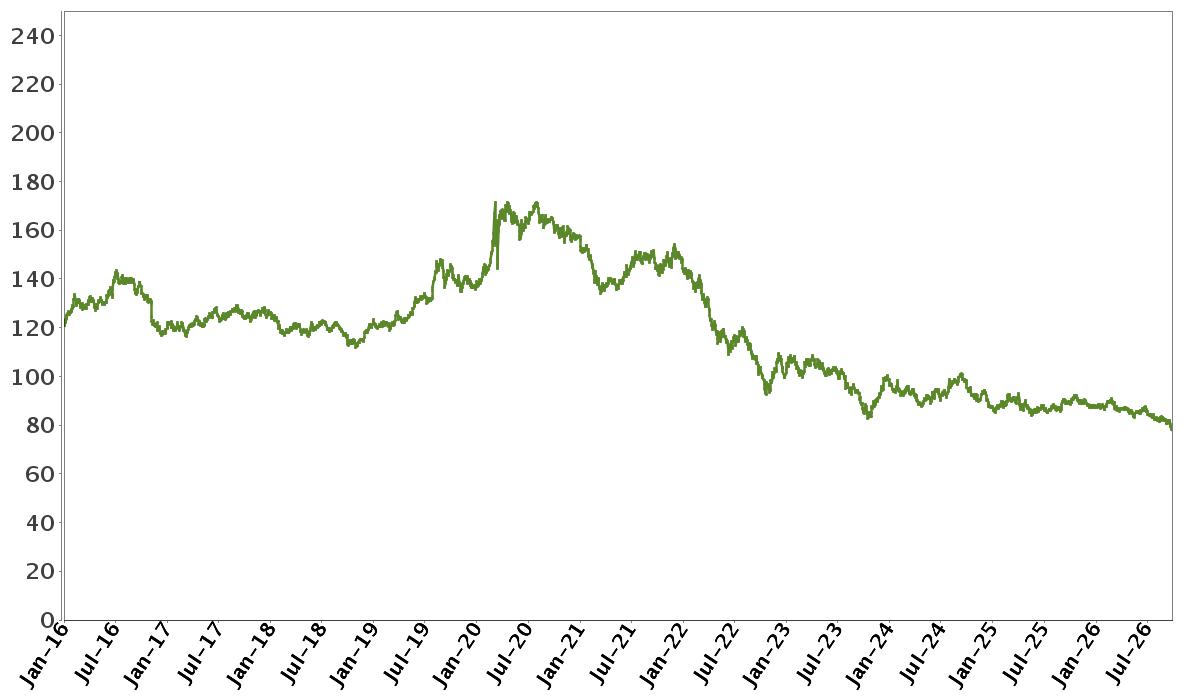
This historical data on the TLT is not necessarily indicative of the future performance of the TLT or what the value of the notes may be. Any historical upward or downward trend in the price per share of the TLT during any period set forth above is not an indication that the price per share of the TLT is more or less likely to increase or decrease at any time over the term of the notes.
Before investing in the notes, you should consult publicly available sources for the prices and trading pattern of the TLT.
| Bear Market-Linked One Look Notes with a Barrier | TS-14 |
| Bear Market-Linked One Look Notes with a Barrier Linked to the iShares® 20+ Year Treasury Bond ETF, due January , 2028 |
Supplement to the Plan of Distribution
Under our distribution agreement with BofAS, BofAS will purchase the notes from us as principal at the public offering price indicated on the cover of this term sheet, less the indicated underwriting discount.
MLPF&S will purchase the notes from BofAS for resale, and will receive a discount in connection with the sale of the notes in an amount up to the full amount of underwriting discount set forth on the cover of this term sheet.
We will pay a fee to LFT Securities, LLC for providing certain electronic platform services with respect to this offering, which reduces the economic terms of the notes to you. An affiliate of BofAS has an ownership interest in LFT Securities, LLC.
We may deliver the notes against payment therefor in New York, New York on a date that is greater than one business day following the pricing date. Under Rule 15c6-1 of the Securities Exchange Act of 1934, trades in the secondary market generally are required to settle in one business day, unless the parties to any such trade expressly agree otherwise. Accordingly, if the initial settlement of the notes occurs more than one business day from the pricing date, purchasers who wish to trade the notes more than one business day prior to the original issue date will be required to specify alternative settlement arrangements to prevent a failed settlement.
The notes will not be listed on any securities exchange. In the original offering of the notes, the notes will be sold in minimum investment amounts of 10,000 units. If you place an order to purchase the notes, you are consenting to MLPF&S and/or one of its affiliates acting as a principal in effecting the transaction for your account.
RBCCM, MLPF&S and BofAS may repurchase and resell the notes, with repurchases and resales being made at prices related to then-prevailing market prices or at negotiated prices, and these prices will include their respective trading commissions and mark-ups or mark-downs. RBCCM, MLPF&S and BofAS may act as principal or agent in these market-making transactions; however, none of them is obligated to engage in any such transactions. At their respective discretion, for a short, undetermined initial period after the issuance of the notes, RBCCM, MLPF&S and BofAS may offer to buy the notes in the secondary market at a price that may exceed the initial estimated value of the notes. Any price offered by RBCCM, MLPF&S or BofAS for the notes will be based on then-prevailing market conditions and other considerations, including the performance of the Market Measure and the remaining term of the notes. However, none of us, RBCCM, MLPF&S, BofAS or any of our respective affiliates is obligated to purchase your notes at any price or at any time, and we cannot assure you that we, RBCCM, MLPF&S, BofAS or any of our respective affiliates will purchase your notes at a price that equals or exceeds the initial estimated value of the notes.
The value of the notes shown on your account statement will be based on RBCCM’s or BofAS’s estimate of the value of the notes if RBCCM, BofAS or another of their respective affiliates were to make a market in the notes, which they are not obligated to do. That estimate will be based upon the price that RBCCM or BofAS, as applicable, may pay for the notes in light of then-prevailing market conditions and other considerations, as mentioned above, and will include transaction costs. At certain times, this price may be higher than or lower than the initial estimated value of the notes.
The distribution of the Note Prospectus in connection with these offers or sales will be solely for the purpose of providing investors with the description of the terms of the notes that was made available to investors in connection with their initial offering. Secondary market investors should not, and will not be authorized to, rely on the Note Prospectus for information regarding RBC or for any purpose other than that described in the immediately preceding sentence.
| Bear Market-Linked One Look Notes with a Barrier | TS-15 |
| Bear Market-Linked One Look Notes with a Barrier Linked to the iShares® 20+ Year Treasury Bond ETF, due January , 2028 |
Structuring the Notes
The notes are our debt securities. As is the case for all of our debt securities, including our market-linked notes, the economic terms of the notes reflect our actual or perceived creditworthiness. In addition, because market-linked notes result in increased operational, funding and liability management costs to us, we typically borrow the funds under market-linked notes at a rate that is lower than the rate that we might pay for a conventional fixed or floating rate debt security of comparable maturity, which we refer to as our internal funding rate. The lower internal funding rate, along with the fees and charges associated with market-linked notes, reduce the economic terms of the notes to you and result in the initial estimated value of the notes on the pricing date being less than their public offering price. Unlike the initial estimated value, any value of the notes determined for purposes of a secondary market transaction may be based on a secondary market rate, which may result in a lower value for the notes than if our initial internal funding rate were used.
Any payment on the notes to holders of the notes will be calculated based on the $10 per unit principal amount and will depend on the performance of the Market Measure. In order to meet these payment obligations, at the time we issue the notes, we may choose to enter into certain hedging arrangements (which may include call options, put options or other derivatives) with BofAS or one of its affiliates. The terms of these hedging arrangements are determined by seeking bids from market participants, including MLPF&S, BofAS and their affiliates, and take into account a number of factors, including our creditworthiness, interest rate movements, the volatility of the Market Measure, the tenor of the notes and the tenor of the hedging arrangements. The economic terms of the notes and their initial estimated value depend in part on the terms of these hedging arrangements. These hedging arrangements are expected to result in a profit to those engaging in the hedging activity, which could be more or less than initially expected, but could also result in a loss.
For further information, see “Risk Factors—Valuation- and Market-related Risks” beginning on page PS-8 and “Use of Proceeds and Hedging” on page PS-27 of product supplement EQUITY MLI-1.
| Bear Market-Linked One Look Notes with a Barrier | TS-16 |
| Bear Market-Linked One Look Notes with a Barrier Linked to the iShares® 20+ Year Treasury Bond ETF, due January , 2028 |
Summary of Canadian Federal Income Tax Consequences
For a discussion of the material Canadian federal income tax consequences relating to an investment in the notes, please see the section entitled “Canadian Federal Income Tax Summary” in the accompanying product supplement.
United States Federal Income Tax Considerations
You should review carefully the section in the accompanying product supplement entitled “United States Federal Income Tax Considerations.” The following discussion, when read in combination with that section, constitutes the full opinion of our counsel, Davis Polk & Wardwell LLP, regarding the material U.S. federal income tax consequences of owning and disposing of the notes.
Generally, this discussion assumes that you purchased the notes for cash in the original issuance at the stated issue price and does not address other circumstances specific to you, including consequences that may arise due to any other investments relating to the Market Measure. You should consult your tax adviser regarding the effect any such circumstances may have on the U.S. federal income tax consequences of your ownership of a note.
In the opinion of our counsel, which is based on current market conditions, it is reasonable to treat the notes for U.S. federal income tax purposes as prepaid financial contracts that are “open transactions,” as described in the section entitled “United States Federal Income Tax Considerations—Tax Consequences to U.S. Holders” in the accompanying product supplement. There is uncertainty regarding this treatment, and the Internal Revenue Service (the “IRS”) or a court might not agree with it. Moreover, because this treatment of the notes and our counsel’s opinion are based on market conditions as of the date of this preliminary term sheet, each is subject to confirmation on the pricing date. A different tax treatment could be adverse to you. Generally, if this treatment is respected, subject to the potential application of the “constructive ownership” regime discussed below, (i) you should not recognize taxable income or loss prior to the taxable disposition of your notes (including upon maturity or an earlier redemption, if applicable) and (ii) the gain or loss on your notes should be treated as short-term capital gain or loss unless you have held the notes for more than one year, in which case your gain or loss should be treated as long-term capital gain or loss.
Even if the treatment of the notes as prepaid financial contracts is respected, purchasing a note could be treated as entering into a “constructive ownership transaction” within the meaning of Section 1260 of the Internal Revenue Code (“Section 1260”). In that case, all or a portion of any long-term capital gain you would otherwise recognize upon the taxable disposition of the note would be recharacterized as ordinary income to the extent such gain exceeded the “net underlying long-term capital gain” as defined in Section 1260. Any long-term capital gain recharacterized as ordinary income would be treated as accruing at a constant rate over the period you held the note, and you would be subject to a notional interest charge in respect of the deemed tax liability on the income treated as accruing in prior tax years. Due to the lack of direct legal authority, our counsel is unable to opine as to whether or how Section 1260 applies to the notes.
We do not plan to request a ruling from the IRS regarding the treatment of the notes. An alternative characterization of the notes could materially and adversely affect the tax consequences of ownership and disposition of the notes, including the timing and character of income recognized. In particular, there is a risk that the notes could be characterized as debt instruments for U.S. federal income tax purposes, in which case the tax consequences of an investment in the notes could be different from those described herein and possibly adverse to certain investors. In addition, the U.S. Treasury Department and the IRS have requested comments on various issues regarding the U.S. federal income tax treatment of “prepaid forward contracts” and similar financial instruments and have indicated that such transactions may be the subject of future regulations or other guidance. Furthermore, members of Congress have proposed legislative changes to the tax treatment of derivative contracts. Any legislation, Treasury regulations or other guidance promulgated after consideration of these issues could materially and adversely affect the tax consequences of an investment in the notes, possibly with retroactive effect.
Non-U.S. Holders. As discussed under “United States Federal Income Tax Considerations—Tax Consequences to Non-U.S. Holders—Dividend Equivalents under Section 871(m) of the Code” in the accompanying product supplement, Section 871(m) of the Internal Revenue Code and Treasury regulations promulgated thereunder (“Section 871(m)”) generally impose a 30% withholding tax on dividend equivalents paid or deemed paid to Non-U.S. Holders with respect to certain financial instruments linked to U.S. equities or indices that include U.S. equities. The Treasury regulations, as modified by an IRS notice, exempt financial instruments issued prior to January 1, 2029 that do not have a “delta” of one. Based on certain determinations made by us, we expect that Section 871(m) will not apply to the notes with regard to Non-U.S. Holders. Our determination is not binding on the IRS, and the IRS may disagree with this determination. If necessary, further information regarding the potential application of Section 871(m) will be provided in the final term sheet for the notes.
We will not be required to pay any additional amounts with respect to U.S. federal withholding taxes.
You should consult your tax adviser regarding the U.S. federal income tax consequences of an investment in the notes, including possible alternative treatments and the potential application of the “constructive ownership” regime, as well as tax consequences arising under the laws of any state, local or non-U.S. taxing jurisdiction.
| Bear Market-Linked One Look Notes with a Barrier | TS-17 |