


PG&E Advances Deployment of Community Microgrids, Announces New Grant Agreements and Second Round of Funding Awards
Together, the projects represent more than
"In addition to the grid investments PG&E is making, community microgrids empower communities to take an active role in building local resilience," said
Building Local Power for Communities
A community microgrid is a grid-connected local energy system that can continue serving customers by operating independently during grid outages.
It can help keep power on for:
- Hospitals and health clinics
- Fire stations and emergency services
- Schools and local businesses
- Other critical facilities and services
Microgrids can use:
- Solar power
- Batteries
- Other energy sources like biomass
- Smart grid equipment—such as switches, circuit breakers or reclosers—paired with microgrid controllers that allow a community to safely separate from the grid and keep power flowing locally during an outage
When the main grid goes down, microgrids can keep key services running for hours or even days.
Tranche 1: Projects move forward with new grant agreements
PG&E is advancing several of the nine projects selected in the first application round, with awardees executing grant agreements indicating they are ready to proceed.
These agreements set the terms and conditions for the disbursement of funds which will support microgrid engineering, design and development work—critical steps to bring projects from concept to construction.
Lake County Advances Innovative FLASHES Microgrids
Three proposed projects in
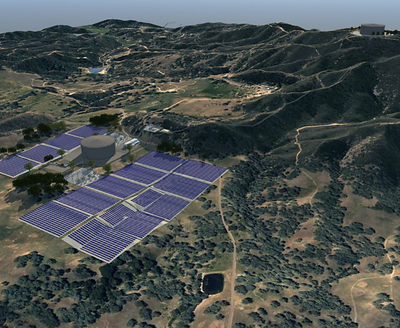
- The proposed projects intend to pair tens of megawatts of locally generated solar energy with pumped hydroelectric storage that uses subsurface water resources. Solar power will be used to pump water to roofed tanks at higher elevations when energy is abundant. When electricity is needed, the water will be released through turbines to generate power.
- The result is a system that could provide both long-duration energy storage and multi-day resilience during outages, as well as additional water supply for firefighting emergencies. If successful, the projects could serve as a model for how communities across
California use local renewable energy and long-duration storage to improve resilience.
"The FLASHES projects carry the potential to deliver energy and wildfire resiliency for
The three proposed microgrids would serve communities along the northwest shore of
All three projects are moving into early development to determine feasibility, with geotechnical core boring, initial test well drilling, and other activities planned over the coming months.
All three FLASHES projects were a result of collaboration between local governments and Trane Energy Services.

"We are proud to partner with PG&E,
Tranche 2: Second round awards expand microgrid footprint
PG&E is also announcing the selection of six new projects from the second MIP application window.
This second wave directs
- Serve more than 2,200 customers
- Support critical facilities, including schools, fire stations and health centers
These projects use a mix of:
- Solar
- Battery storage
- Biomass and biodiesel
Together, they expand access to reliable, local energy solutions across PG&E's service area, including projects in
Award amounts range between
One project from Tranche 2 is already advancing: in
- This system will energize most of the town of
Pescadero , a remote coastal community along theSan Mateo coastline. It includes more than 200 customers including key critical facilities. - The microgrid will integrate a roughly 1.5 megawatt (MW) solar system and a 2 MW battery energy storage system, to support a minimum of 24 hours of standalone operation.
- In addition to PG&E's MIP funding, this project will also include funding from WestLight Energy and the County of San Mateo.
"When a community faces a challenge that doesn't have an obvious solution, local public agencies like WestLight Energy have an opportunity to bring partners together," says
What Customers Can Expect
As these projects move forward, customers can benefit from:
- More resilient electric service
- Greater protection for critical community services
- Cleaner local energy resources
- Improved wildfire and emergency resilience
- Stronger community energy independence
More About MIP
The Microgrid Incentive program is a statewide
- Authorized and approved by the California Public Utilities Commission, the new program allocates a total of
$79.2 million in project funding for PG&E,$83.3 million for Southern California Edison, and$17.5 million for San Diego Gas and Electric. - Projects selected under the MIP can receive up to
$14 million in award funding each for the design and development of a multi-customer, front-of-the-meter community microgrid. - Customers and communities interested in learning more or applying for grants through the third and final wave of PG&E MIP grant funding should visit www.pge.com/mip
About PG&E
Pacific Gas and Electric Company, a subsidiary of PG&E Corporation (NYSE: PCG), is a combined natural gas and electric utility serving more than sixteen million people across 70,000 square miles in Northern and Central California. For more information, visit pge.com, pge.com/news, and pge.com/innovation.

 View original content to download multimedia:https://www.prnewswire.com/news-releases/pge-advances-deployment-of-community-microgrids-announces-new-grant-agreements-and-second-round-of-funding-awards-302881464.html
SOURCE Pacific Gas and Electric Company