

Should you own mining stocks are Iran war rages on? Bernstein weighs in
Investing.com -- The weeks-long war in the Middle East has roiled commodity markets and left investors thinking that "peak pain" may already be behind us, according to Bernstein.
The MSCI World Metals & Mining Index has recovered to within about 5% of its pre-war level, reflecting a sharp V-shaped rebound in equity markets over the past two weeks as investors increasingly price in a limited earnings impact from the conflict. Meanwhile, the broader MSCI World Index has already fully recovered and is up 2% over the same period.
Still, Bernstein analyst Bob Brackett argues that most mining stocks remain richly valued, with multiples above their five-year averages despite strong commodity prices.
"We continue to see valuation risks in most of our names," he wrote, flagging the sector as arguably near a cycle peak for several key commodities, including copper and zinc.
The main exceptions are Newmont and Barrick, which trade below their historical averages and are rated Outperform at Bernstein.
The Iran conflict has disrupted the supply of several key commodities, with aluminium emerging as one of the most vulnerable. The Gulf region supplies roughly 9% of global aluminium output, and prices have risen 17% since the conflict began.
Qatalum is operating at approximately 60% capacity, while EGA’s Al Taweelah facility has been severely damaged, with a longer recovery expected.
“We expect Aluminium to stay higher than mid-cycle price in 2026,” Brackett said, maintaining an Outperform rating on Rio Tinto, which has meaningful aluminium exposure.
Thermal coal has also benefited, with LNG supply disruptions pushing coal back into the role of marginal power source, such as during the 2022 energy crisis. Glencore, which has significant thermal coal exposure, but the analysts suggest the market may not be fully pricing in the upside from its coal and trading businesses.
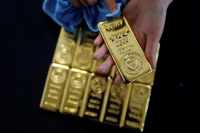
Gold, meanwhile, has been caught in a crossfire. Rising inflation expectations from higher energy prices pushed U.S. 10-year real yields above 2.10%, weighing on bullion.
Prices fell from around $5,300 per ounce to $4,400 before partially recovering after ceasefire announcements.
“In the short-term, any conflict escalation would harm gold prices, which could be an excellent opportunity to buy gold. We continue to see demand from central bank for reserve diversification is structural, and unlikely to change due to the war,” Brackett said.
Bernstein slightly lowered its 2026 gold price forecast to $4,818 per ounce while keeping its longer-term targets unchanged, projecting prices will rise steadily to $6,100 per ounce by 2030.