


Southwest Airlines (LUV) Tops Q1 EPS by 9c
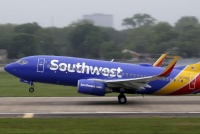
Southwest Airlines (NYSE: LUV) reported Q1 EPS of $0.70, $0.09 better than the analyst estimate of $0.61. Revenue for the quarter came in at $5.15 billion versus the consensus estimate of $5.12 billion.
Cost Performance and Outlook
First quarter 2019 total operating expenses increased 7.3 percent, year-over-year, to $4.6 billion. Total operating expenses per ASM (CASM, or unit costs) increased 5.9 percent, as compared with first quarter 2018. Excluding special items3, first quarter 2019 total operating expenses increased 6.5 percent to $4.6 billion, or 5.1 percent on a unit basis, year-over-year.
First quarter 2019 economic fuel costs3 were $2.05 per gallon and included $.06 per gallon in premium expense and $.03 per gallon in favorable cash settlements from fuel derivative contracts, compared with $2.09 per gallon in first quarter 2018, which included $.07 per gallon in premium expense and $.05 per gallon in favorable cash settlements from fuel derivative contracts. First quarter 2019 ASMs per gallon, or fuel efficiency, improved 0.5 percent, year-over-year. The Company estimates second quarter 2019 fuel efficiency to be flat to down 1 percent, year-over-year, due to the removal of the Company's most fuel-efficient aircraft from its schedule as a result of the MAX groundings.
Based on the Company's existing fuel derivative contracts and market prices as of April 18, 2019, second quarter 2019 economic fuel costs are estimated to be in the range of $2.10 to $2.20 per gallon4, including $.05 per gallon in premium expense and an estimated $.08 per gallon in favorable cash settlements from fuel derivative contracts, compared with $2.21 per gallon in second quarter 2018, which included $.06 per gallon in premium expense and $.08 per gallon in favorable cash settlements from fuel derivative contracts. As of April 18, 2019, the fair market value of the Company's fuel derivative contracts for the remainder of 2019 was an asset of approximately $102 million, and the fair market value of the hedge portfolio settling in 2020 and beyond was an asset of approximately $192 million. Additional information regarding the Company's fuel derivative contracts is included in the accompanying tables.

Excluding fuel and oil expense and special items, first quarter 2019 operating expenses increased 8.8 percent, as compared with first quarter 2018. First quarter 2019 profitsharing expense was $88 million, as compared with $102 million in first quarter 2018. Excluding fuel and oil expense, profitsharing expense, and special items, first quarter 2019 operating expenses increased 9.5 percent, or 8.1 percent on a unit basis, year-over-year. This increase primarily was due to the Company's underutilization of its fleet in first quarter 2019 as a result of the delay in starting service to Hawaii, and the resulting one-time start-up costs; higher depreciation and ownership costs; the timing of maintenance events and technology investments; the flight cancellations; and the impact of the TA reached with AMFA, which resulted in an annual 2019 increase of approximately $42 million in salaries, wages, and benefits, with an approximate $30 million impact to first quarter 2019. The Company's first quarter 2019 unit costs, excluding fuel and oil expense and profitsharing expense, were lower than its latest guidance by approximately two points, primarily due to better than expected Employee productivity and healthcare trends, as well as shifting of certain advertising and airport costs from first quarter into future periods in 2019.
Based on current cost trends and flight schedule adjustments through August 5th, the Company estimates second quarter 2019 CASM, excluding fuel and oil expense and profitsharing expense, to increase in the 10.5 to 12.5 percent range, compared with second quarter 2018. The year-over-year increase is driven largely by the Company's underutilization of its fleet in second quarter 2019 due to the delay in starting service to Hawaii, one-time Hawaii start-up costs, and flight cancellations due to the MAX groundings. The Company's operating costs are largely fixed once flight schedules are published; therefore, the volume of flight cancellations in second quarter 2019 due to the MAX groundings is expected to result in an estimated five-point year-over-year headwind to second quarter 2019 CASM, excluding fuel and oil expense and profitsharing expense. Other primary drivers of the second quarter 2019 estimated unit cost increase are higher airport costs; higher depreciation and ownership costs; the timing of maintenance events and technology investments; and shifting of expenses from first quarter into second quarter 2019.
Based on current cost trends and flight schedule adjustments through August 5th, the Company now estimates annual 2019 CASM, excluding fuel and oil expense and profitsharing expense, to increase in the range of 5.5 to 6.5 percent, year-over-year, compared with 2018's 8.53 cents, which excludes fuel and oil expense, profitsharing expense, and special items. This increase includes an estimated two-point year-over-year headwind due to lower annual 2019 capacity as a result of the MAX groundings, and an estimated one-half point year-over-year headwind due to incremental costs related to the TA with AMFA.
For earnings history and earnings-related data on Southwest Airlines (LUV) click here.